Why are my gutters overflowing in Allentown?
Overflowing gutters in Allentown almost always trace back to a clogged downspout, a sagging run, or a system too small for Buffalo's rain. Here's how to diagnose and fix it.
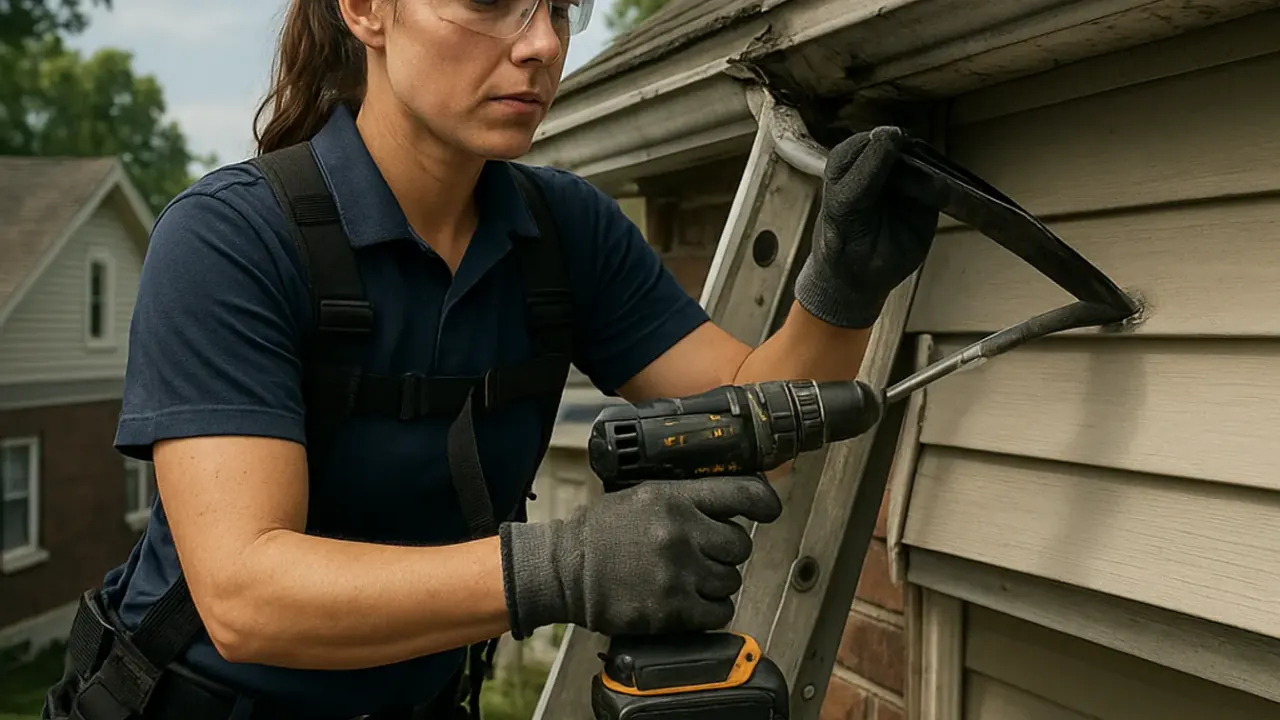
Your gutters are overflowing in Allentown because water is entering faster than it can drain, or because the system is physically unable to carry it away. In nine out of ten homes we inspect here, the culprit is a clogged downspout or a sagging gutter run that lets water pool and spill over the front lip. The rest of this post walks through every cause we see in Allentown and the surrounding Buffalo neighborhoods, how to tell which one you have, and what it takes to fix it.
Allentown's housing stock is old - most of these homes were built between 1880 and 1930 - and the gutters on them have been patched, extended, and re-hung more times than anyone can count. That history matters. A gutter that worked fine for decades can start overflowing after one heavy October storm because a hanger finally pulled loose or a downspout filled with shingle grit.
The short answer: why gutters overflow in Allentown
Gutter overflow in Allentown is a drainage-capacity problem: the volume of water hitting your roof exceeds what your gutters and downspouts can move. That happens for five reasons - clogs, sagging, undersized components, too few downspouts, or damage. Find which one applies to your house and the fix becomes obvious.
Here is the quick diagnostic we run on every call:
- Water spills over the front lip along the whole run - the gutter is sagging or the pitch is wrong.
- Water pours out of one spot like a faucet - a downspout is clogged or disconnected.
- Water shoots over the top during heavy rain only - the system is undersized or you need more downspouts.
- Water drips behind the gutter and down the fascia - the gutter has pulled away from the roofline.
If you are not sure which one you have, a Gutter Inspection Buffalo NY will tell you in about 20 minutes. We check pitch, hanger spacing, downspout flow, and the condition of the fascia behind the gutter.
Clogged downspouts are the number one cause
A clogged downspout is the single most common cause of gutters overflowing in Allentown, Buffalo NY. The gutter itself can look clean while the downspout below it is packed solid with leaves, shingle grit, and maple seeds.
Here is what happens. Water enters the gutter and flows toward the outlet. If the downspout is blocked, the water backs up until the gutter fills and spills over the front. From the ground it looks like the gutter is broken. It is not - it is just full.
Allentown has a lot of mature silver maples and London planes. Those trees drop seeds in late spring and leaves from late September through November. A single large maple near your roofline can fill a 2x3 downspout in one season. We pull handfuls of seed pods out of Allentown downspouts every October.
The fix is straightforward: flush the downspout from the top with a hose or a professional Gutter Flushing Buffalo NY service. We run water through every downspout until it exits clean at the bottom, then check the flow rate. If a downspout still backs up after flushing, there is a physical obstruction - usually a crushed section or a bird nest - and it needs to be opened or replaced.
How to tell if your downspout is clogged
Wait for a heavy rain and stand at the bottom of each downspout. If water is not pouring out at the same rate it is entering the gutter, the downspout is the problem. You can also tap the downspout with your knuckles - a hollow ring means it is clear, a dull thud means it is packed.
Sagging gutters and failed hangers
Sagging gutters cause overflow because water cannot flow uphill. Gutters need a pitch of roughly 1/16 inch per foot toward the downspout. When a hanger pulls loose, that pitch disappears and water pools in the low spot until it spills over the front.
On Allentown's older homes, hangers are often spaced 36 inches apart or more. Modern standards call for 24 inches on center, and closer in areas with heavy snow load. Wide spacing plus decades of freeze-thaw cycles equals sag.
You can spot a sag from the ground. Stand across the street and look along the gutter line. If it dips in the middle or slopes away from the downspout, it needs to be re-pitched. That is a Gutter Realignment Buffalo NY job - we reset the hangers, restore the pitch, and re-secure the run to the fascia.
If the fascia behind the gutter is rotted, realignment will not hold. In that case the fascia needs to be repaired first, then the gutter re-hung. We see this a lot on homes near Gutter Cleaning in Allentown where the original wood fascia has been wet for years.
Undersized gutters on Allentown's older homes
Undersized gutters overflow during heavy rain because they simply cannot hold the volume. Many Allentown homes still have 4-inch K-style gutters installed when the house was built. A 4-inch gutter handles roughly 1,200 square feet of roof area in a moderate rain. A 5-inch gutter handles about 2,000 square feet. A 6-inch gutter handles closer to 3,000.
Buffalo gets about 40 inches of rain and 95 inches of snow per year. A 1,500-square-foot roof on a 4-inch gutter system will overflow in any storm that drops more than half an inch in an hour. That happens here several times a year.
If your gutters overflow only during heavy rain and the system is otherwise clean and properly pitched, undersizing is the likely cause. The fix is a Gutter Replacement Buffalo NY with 5-inch or 6-inch seamless aluminum. Typical 2026 pricing in Buffalo for a 150-foot seamless replacement runs $1,800 to $3,200 depending on height and accessibility.
How many downspouts do you need?
A good rule of thumb is one downspout for every 30 to 40 feet of gutter run. If your house has a 60-foot run with a single downspout at one end, the far end will overflow no matter how clean it is. Adding a second downspout at the opposite end often solves the problem for a fraction of the cost of a full replacement. That is a Downspout Installation Buffalo NY job - usually two to three hours of work.
Roof pitch, valleys, and where water lands
Roof pitch and valley placement concentrate water in specific spots, and those spots overflow first. A steep roof sheds water faster than a shallow one. A valley that dumps onto a short gutter run can overwhelm it in seconds.
Walk your roofline after the next storm. Look for the spots where water is still dripping an hour after the rain stops. Those are your concentration points. They usually correspond to a valley outlet, a dormer, or a transition between roof planes.
If the concentration point is directly above a gutter outlet, the water has nowhere to go but over the front. The fix is usually to add a downspout at that point or to install a diverter that spreads the flow along the gutter. We handle both as part of our Roof and Gutter Debris Removal Buffalo NY service, because the debris that collects in valleys makes the problem worse.
What to watch out for: common mistakes
The most common mistake we see in Allentown is homeowners cleaning the gutter but not the downspout. The gutter looks perfect from the ladder. The downspout is still packed. The overflow continues and the homeowner assumes the gutter is broken.
Other mistakes we run into regularly:
- Hosing the gutter from the ground. This pushes debris into the downspout and makes the clog worse. Always work from the top down.
- Using a leaf blower on a dry gutter. It moves the top layer and leaves the compacted layer at the bottom, which is the layer that blocks water.
- Sealing a leak before checking the pitch. If the gutter is sagging, the sealant will crack within a season. Fix the pitch first.
- Ignoring the fascia. A gutter that has pulled away from rotted fascia will keep pulling away no matter how many times you tighten the hangers.
- Waiting until spring. Buffalo's freeze-thaw cycle does the most damage between December and March. A clogged gutter in November becomes a cracked gutter in February.
One more thing: do not stand on the top rung of a ladder to reach a gutter. Every year we get calls from homeowners who tried it. It is not worth the risk. A Gutter Tune-Ups Buffalo NY visit costs less than an emergency room copay.
When to call a professional
Call a professional when the overflow happens in more than one place, when the gutter has visibly pulled away from the house, or when you have already cleaned the gutter and the problem persists. Those three situations almost always mean a structural issue - pitch, hanger spacing, or undersizing - that a cleaning will not fix.
We also recommend calling us if your home is more than two stories, if the gutter run is longer than 40 feet, or if you have any doubt about the condition of the fascia. We carry the ladders and the safety gear, and we can tell you in one visit whether you need a repair or a replacement.
Witz Gutter Cleaning works across Allentown and the rest of Buffalo. We show up when we say we will, we tell you what we find, and we give you a price before we start. If the gutter only needs a cleaning, that is what we will tell you.
Frequently Asked Questions
Why are my gutters overflowing in Allentown?
The most common cause is a clogged downspout, followed by a sagging gutter run that has lost its pitch. In older Allentown homes, undersized 4-inch gutters and too few downspouts are also frequent culprits. A 20-minute inspection will tell you which one you have.
How do I stop gutters from overflowing in Allentown Buffalo NY?
Start by flushing every downspout until water runs clear, then check the gutter pitch with a level. If the gutter sags, reset the hangers. If it still overflows in heavy rain, add a downspout or upgrade to 5-inch or 6-inch gutters. Most fixes take under three hours.
What causes gutter overflow in Allentown New York?
Four things: debris clogs, lost pitch from failed hangers, undersized gutters on older homes, and too few downspouts for the roof area. Buffalo's 40 inches of annual rain and heavy leaf drop from mature maples make all four worse than in most cities.
Who fixes overflowing gutters in Allentown Buffalo?
Witz Gutter Cleaning handles gutter cleaning, flushing, realignment, repair, and replacement across Allentown and Buffalo. We diagnose the cause on the first visit and give you a price before any work starts. Call 716-215-7938 to schedule.
How often should gutters be cleaned in Allentown?
Twice a year is the minimum here - once in late spring after seed drop and once in late October after the leaves come down. If you have a large maple or oak within 30 feet of the roofline, plan on three cleanings. Homes under heavy tree cover often need a fourth visit in December.
Get help with Gutter Cleaning in Buffalo
If your gutters are overflowing and you want it fixed before the next storm, call Witz Gutter Cleaning at 716-215-7938. We serve Allentown and every neighborhood in Buffalo, and we can usually get to you within a few days.
One call, one visit, and you will know exactly what is wrong and what it costs to fix. That is the whole process.